FOR PASTA PRODUCERS AND PASTA MANUFACTORIES
Dried pasta of artisan quality.
For pasta producers making 20 kg or more per day: Herb.ERT dries ribbon pasta, shaped pasta and speciality doughs gently, reproducibly and independently of the room climate – as at Biolandhof Kelly with lupin pasta.
from approx. 20 kg pasta per day
automatic pasta programme
230 V, approx. 0.5 kW
made in Lower Austria
The starting point
Drying decides whether good pasta becomes a good product.
Drying is the longest and most delicate stage of pasta production. Too much heat makes pasta brittle and pale, overly humid room air prolongs drying and increases the risk of mould, and too much air movement makes pasta crack. In open systems, the result depends on the weather, the season and the room climate: humid in autumn, dry in winter, muggy in summer.
Herb.ERT creates a controlled, closed drying environment instead. The Dry-Soft process with its automatic pasta programme draws moisture evenly from the inside out – without drying shock, without crust formation and without constant readjustment. The result: pasta with a beautiful colour, a good bite and stable quality, batch after batch.
From dough to branded product
Stable shape. True colour. Shelf-stable.


Stable instead of brittle
A pre-drying stage lets the dough relax, and final drying takes place under mild conditions. Moisture stays balanced inside and out – preventing cracks, breakage and crumbling pieces, even with lasagne sheets and pasta nests.


Colour and bite are preserved
Without aggressive heat, egg pasta does not fade and keeps its texture. You can taste it when cooking – and see it on the shelves of farm shops, delicatessens and online shops.

Plannable stock
Fully dried pasta can be packed and stored properly. You produce when it suits your workflow and deliver when retailers, restaurants or customers order.
Methods compared
Why open-air drying and hot air reach their limits
Pasta can be dried on racks, stands or in a hot-air drying cabinet. In professional production, however, these methods quickly become a risk to quality, hygiene and costs.
One cubic metre of room air contains 100 to 250 CFU of microorganisms. Conventional dryers connected to room air often move 500 m³ of air per hour or more over the pasta. In the closed Herb.ERT drying cabinet, only around 1 m³ of process air circulates.
Three methods at a glance
| Air drying on racks | Hot-air drying cabinet | Herb.ERT Dry-Soft | |
|---|---|---|---|
| Temperature | room temperature | high, with heating elements | 25–40 °C, no heating elements |
| Dependence on room climate | high | medium | low, closed system |
| Air moved over the product | all of the room air | often 500 m³ per hour or more | around 1 m³ of process air |
| Risk of cracks and breakage | high with draughts | high with too much heat and air flow | low thanks to pre-drying and mild final drying |
| Energy | low, but lots of space and time | high due to heating energy | approx. 0.5 kW, no heating energy |
| Workload | turning, checking, rearranging | setting time and temperature | automatic pasta programme |
General comparison of typical methods. Actual values depend on recipe, shape, dough thickness and loading; commercial producers must also comply with food law requirements on residual moisture, packaging and shelf life.
Process
Dry-Soft instead of hot air
Herb.ERT dries without heating energy: the Dry-Soft process works in a closed process-air system and uses condensation enthalpy and heat pump technology. The automatic pasta programme first pre-dries gently and then brings the pasta evenly to its firm, elastic final consistency. Guide values:
8–24 hours
Drying time depending on raw weight, shape and dough thickness. Compact products such as large pasta nests take correspondingly longer.
max. 13 % residual moisture
Target value after cooling, so that microbiological and biochemical processes come to a standstill.
approx. 0.5 kW
Connected load of one drying cabinet on a standard 230 V socket, without heating elements.
up to 7.2 m²
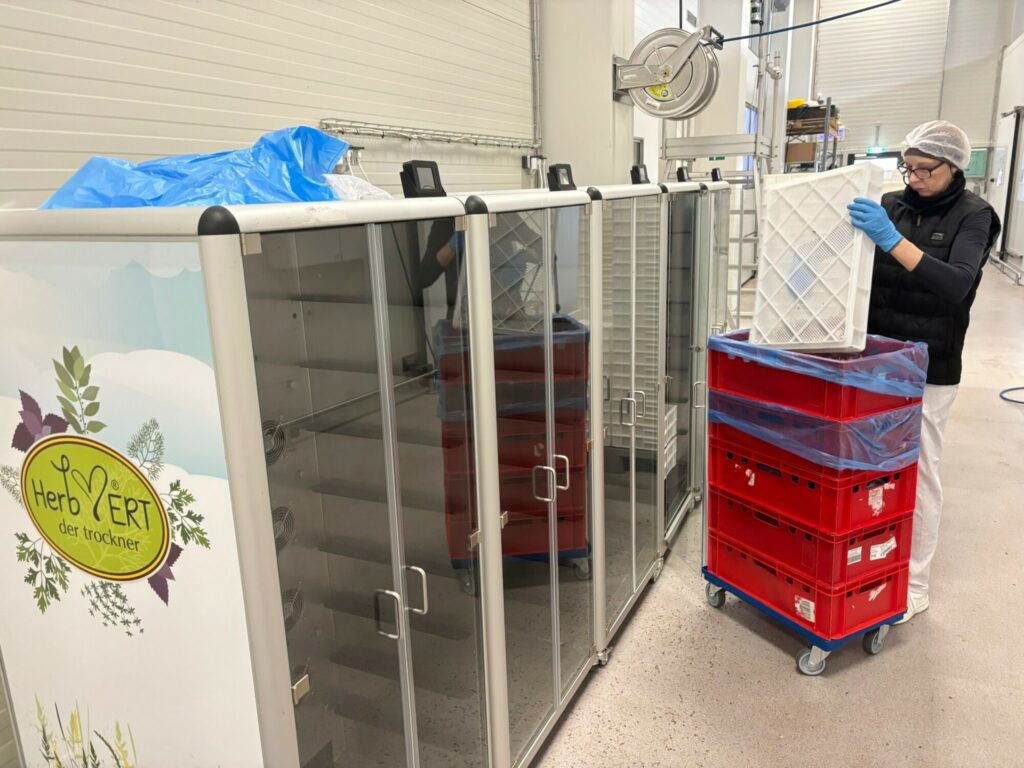
Drying area per drying cabinet. Several cabinets work together in a cluster as a drying line.
Pasta types
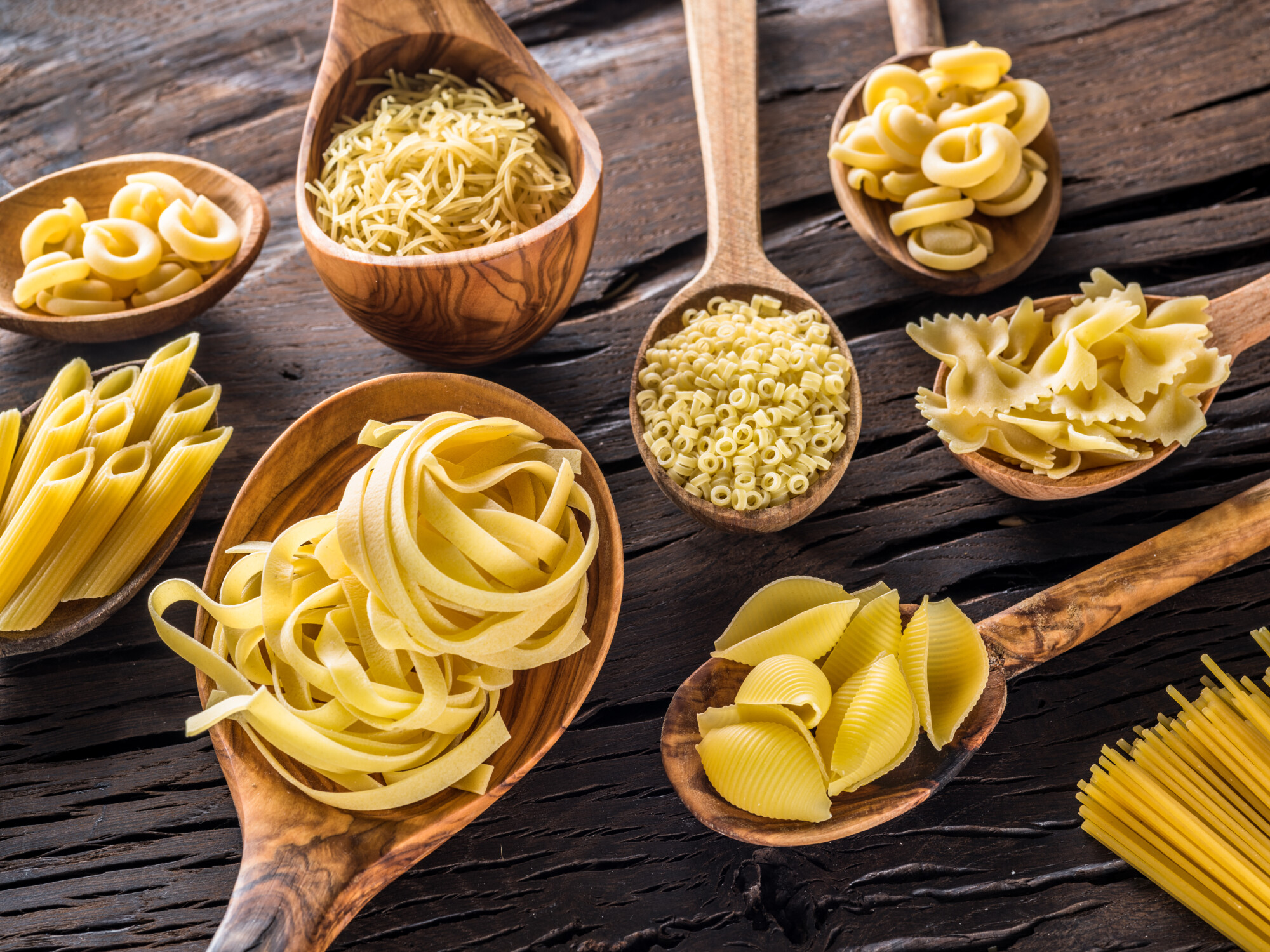
Which pasta can be dried with Herb.ERT
Any pasta dough can be dried – with or without egg, made from durum wheat, spelt or pulses, with vegetables or herbs. What matters is the recipe, shape, dough thickness and careful handling. Before getting started, we discuss your pasta types and the right loading. The basics in detail: drying pasta systematically (in German).
Ribbon pasta, long pasta and shaped pasta
Tagliatelle
The classic ribbon pasta. Spread loosely or dried as nests, it keeps its colour and bite.
Spaghetti and linguine
Long, thin pasta that dries evenly. Gentle air flow keeps the strands from breaking.
Tagliolini
Fine ribbon pasta that dries quickly. Spread loosely on the tray so nothing sticks together.
Pappardelle
Wide ribbons with a large surface. Gentle pre-drying prevents cracks at the edges.
Soup pasta
Small shapes for soups and stews, well suited to regular production in larger batches.
Penne and rigatoni
Extruded tube pasta. Even drying inside and out keeps the shape stable.
Farfalle
The dense centre dries more slowly than the edges – this is exactly where controlled final drying pays off.
Fusilli and elbow macaroni
Popular shaped pasta for farm shops and retail. Fully dried, it snaps cleanly and dry in the break test.
Lasagne sheets
Large and delicate: lasagne sheets benefit especially from gentle air flow without drying shock.
Pasta nests
Compact products take a little longer. The automatic programme brings them to final moisture without over-drying.
Egg pasta
With egg pasta, complete and hygienic drying is particularly important. The closed system creates stable conditions for it.
Egg-free pasta
Durum wheat and spelt pasta dry reliably, regardless of season and room humidity.
Speciality doughs and artisan products
Speciality recipes are a strong selling point for pasta manufactories – and place their own demands on drying. Talk to us about your recipe.
Lupin and pulse pasta
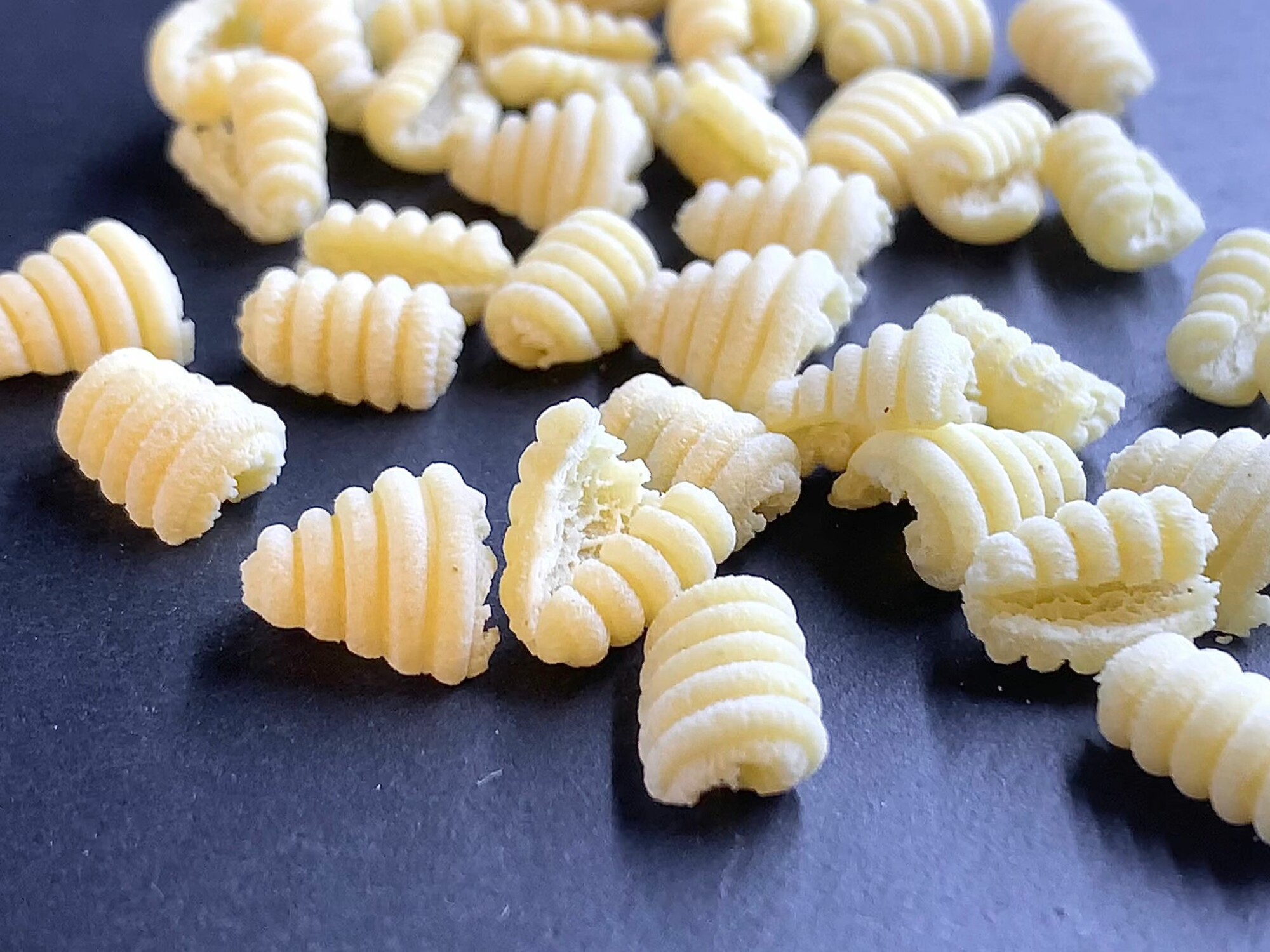
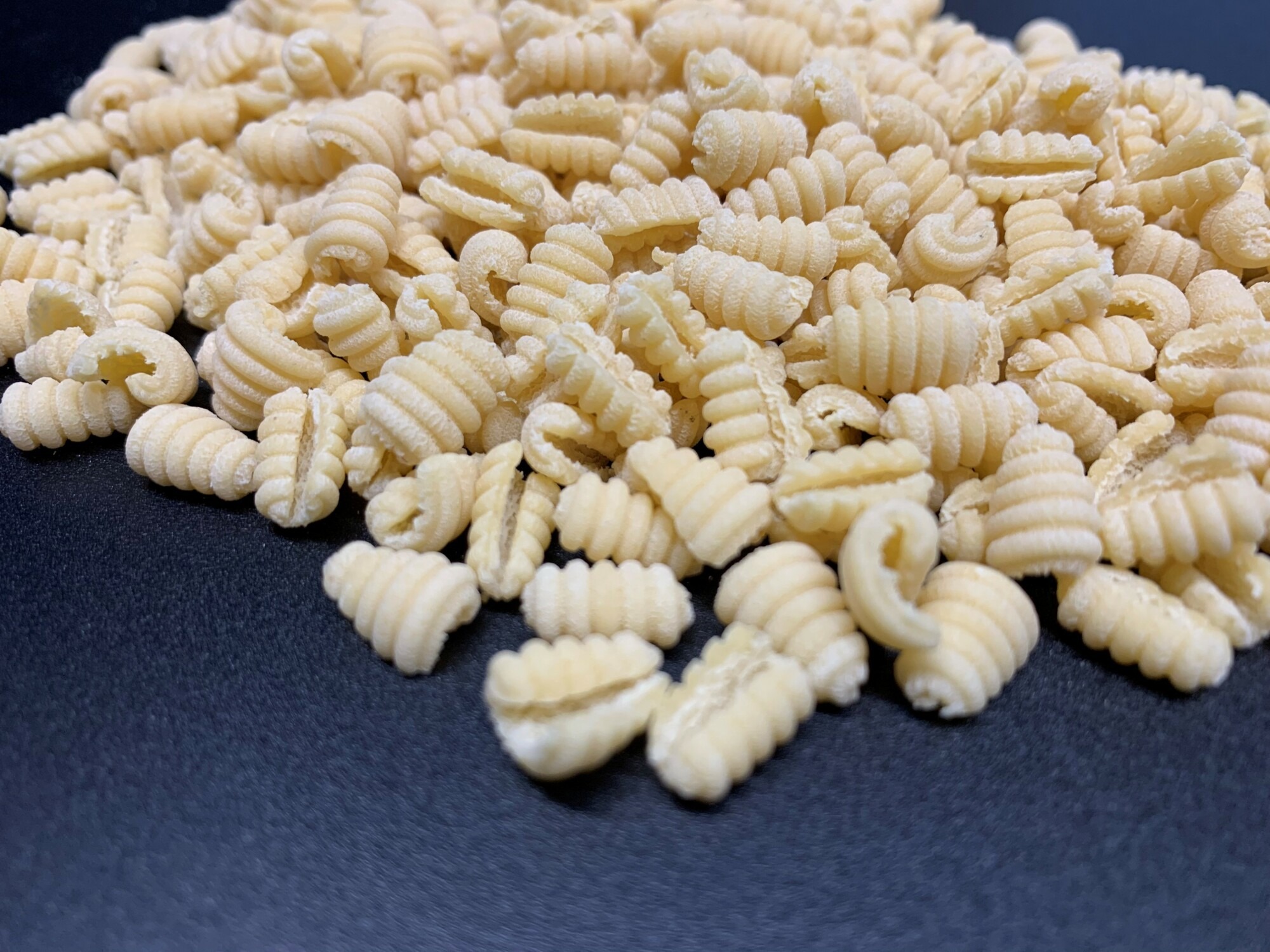
Protein-rich doughs made from lupin, lentil or chickpea – in regular production at Biolandhof Kelly.
Vegetable and herb pasta
With spinach, beetroot or herbs: gentle temperatures preserve the natural colour.
Salted doughs
Salt is hygroscopic and draws moisture from the air. Such doughs often do not dry completely in open air – in the closed drying cabinet they do.
Wholegrain and spelt
Doughs with their own texture, dried evenly for reliable cooking quality.
Pasta for hospitality
Homemade pasta for your own kitchen or the hotel shop: dried, portioned and available at any time.
Case study
In practice: pasta with Herb.ERT
Reference
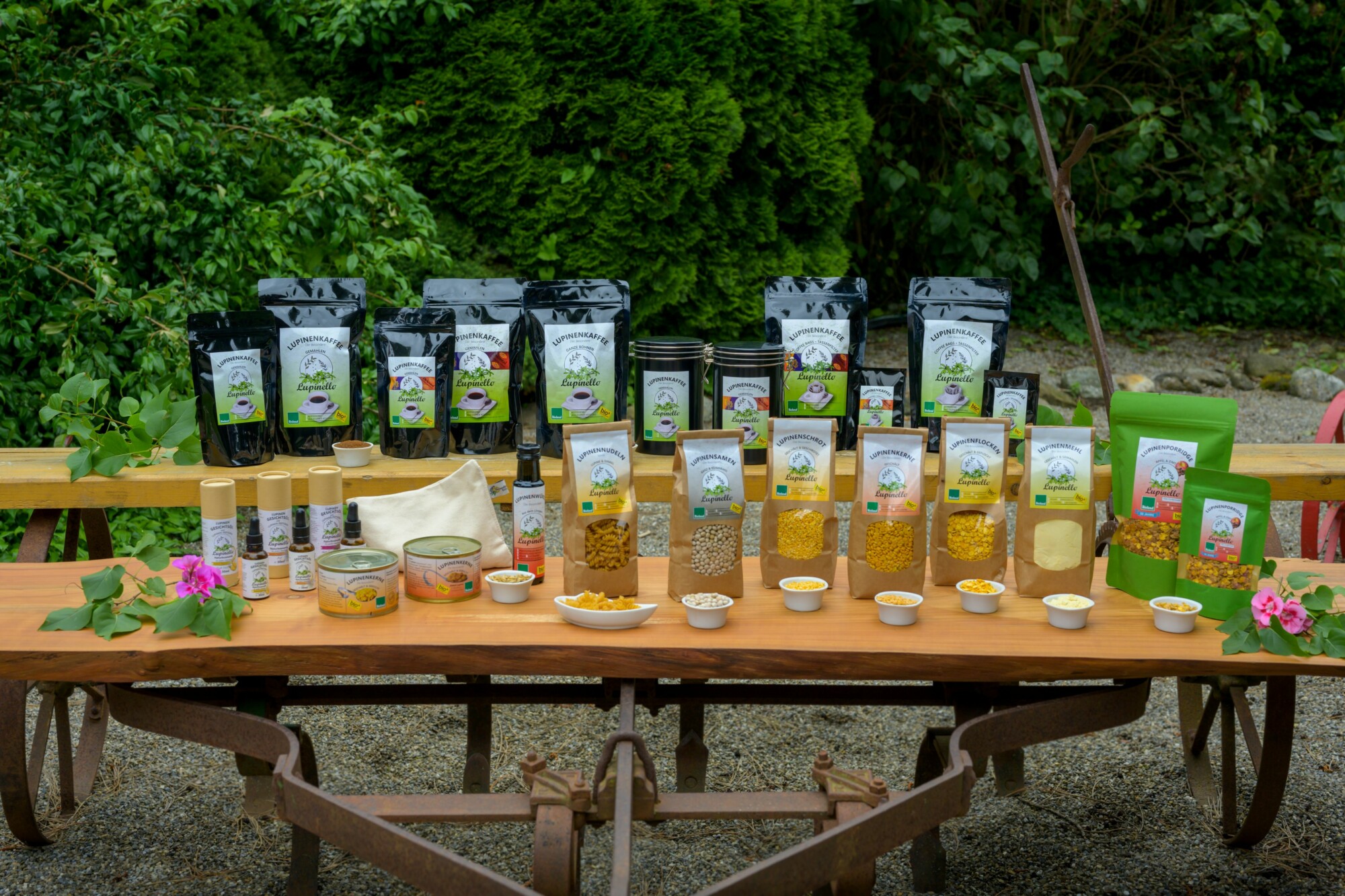
Biolandhof Kelly, Herdwangen (Germany)
Biolandhof Kelly specialises in growing and processing sweet lupins and keeps the entire production process in its own hands – from the field to the lupin pasta. With Herb.ERT, the pasta is dried gently so that nutrients and aroma are preserved. Its customers are health-conscious consumers who value regional organic products.

Customer voices
Doris W., pasta production
“I’m thrilled. At first I was sceptical whether the investment would pay off. But now I’m completely convinced. We dry 20 kilos a day in our drying cabinet – and the quality is unique.”
Anni F., food processing: “I never thought Herb.ERT would save us so much time. The large drying area is incredibly helpful.”
Gallery: pasta from the Herb.ERT
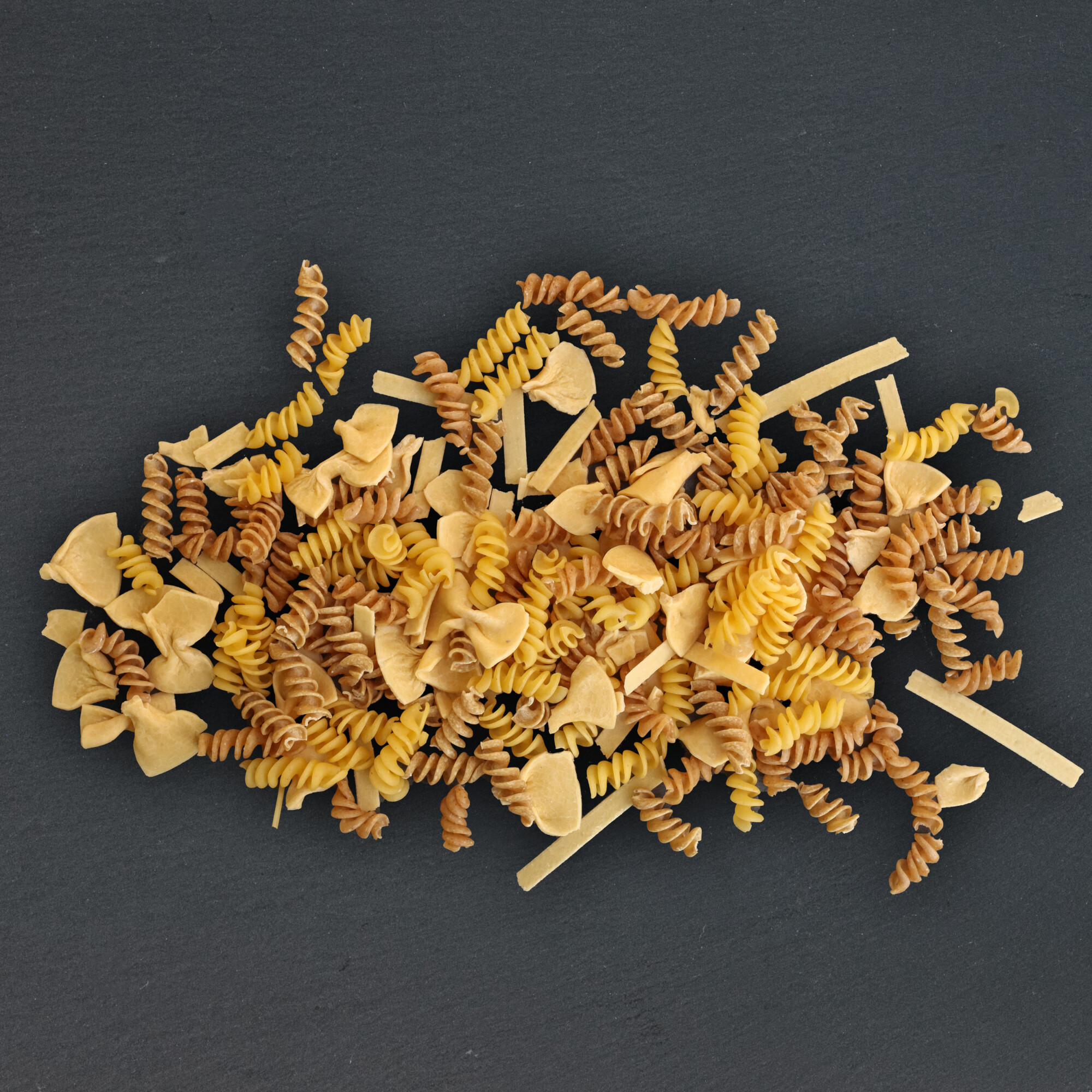

Herb.ERT users also include renowned chefs such as Jan Hartwig, Juan Amador, Andreas Döllerer, Alexander Herrmann, Lukas Nagl, Hannes Müller and Alain Weissgerber.
Sizing
From drying cabinet to drying line
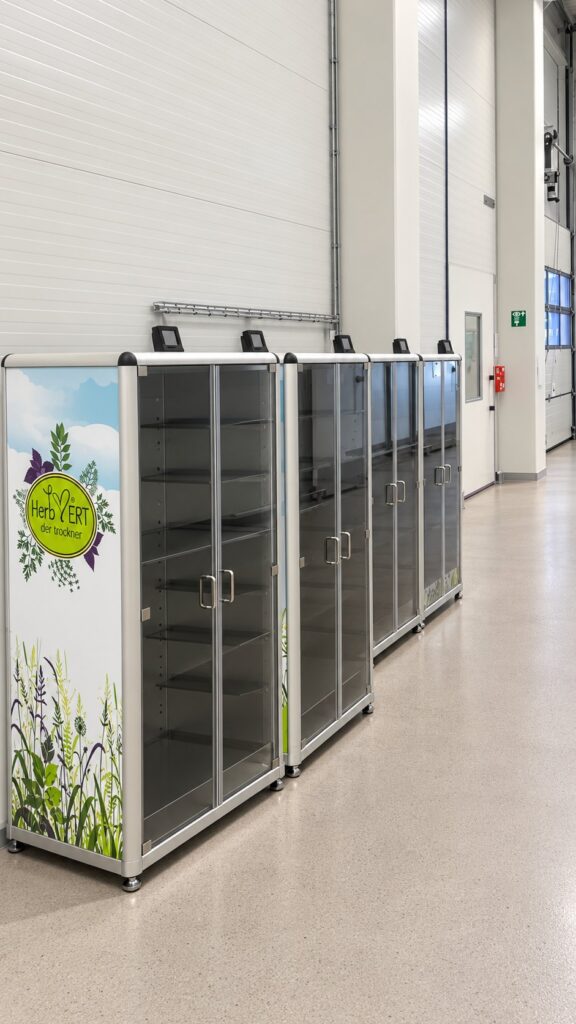
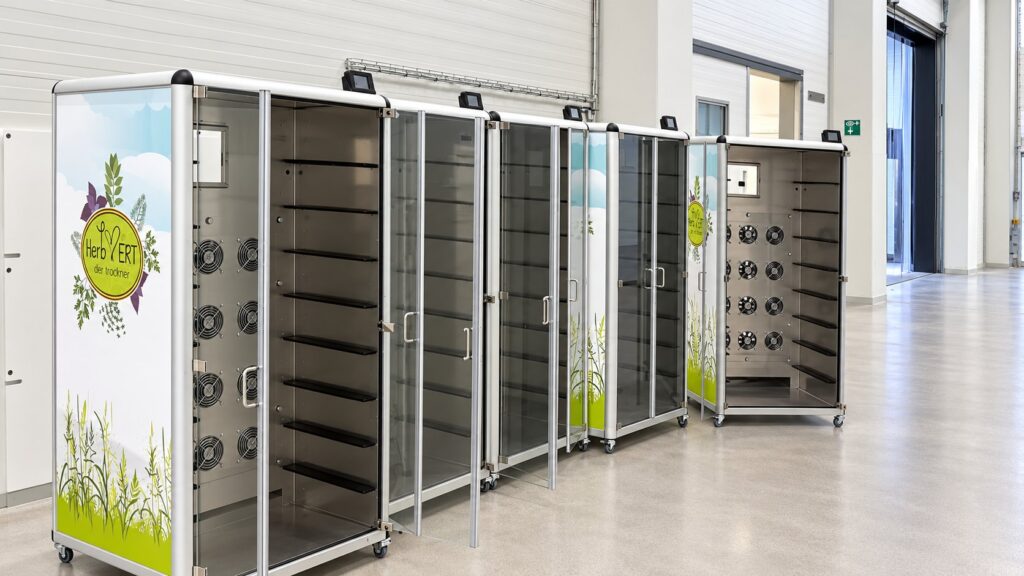
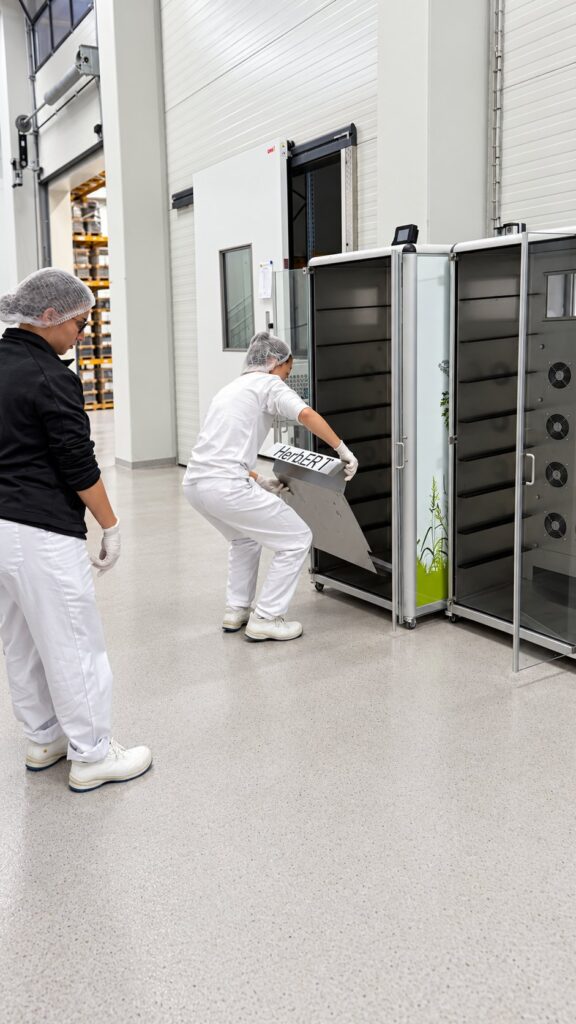
From around 20 kg of pasta per day, a dedicated Herb.ERT drying cabinet pays off. As production grows, further cabinets are added to the cluster, or a TC Container for 60 to 500 kg per batch. The advantage: pasta types and recipes are dried in separate batches, capacity grows modularly, and maintenance never shuts down the entire production.
| Type | drying cabinet, several drying cabinets in a cluster or TC Container, designed per project (custom solutions) |
| Drying area | drying cabinet up to 7.2 m²; TC Container for 60 to 500 kg per batch; Workstation with 2.1 m² for hospitality and small quantities |
| Pasta programme | automatic cycle control: gentle pre-drying, mild final drying, no readjustment of time or temperature |
| Process | closed process-air system, no exhaust air, no outside air, no heating elements |
| Drying time | 8–24 hours depending on raw weight, shape and dough thickness |
| Residual moisture | target value max. 13 % after cooling |
| Connection | 230 V per drying cabinet, connected load approx. 0.5 kW, no three-phase power required |
| Energy | no heating energy: condensation enthalpy and heat pump technology instead of hot air |
| Hygiene | stainless steel interior, around 1 m³ chamber volume instead of room air, removable drying module |
| Service | drive motor and control unit individually replaceable, spare parts for at least 10 years |
| Manufacturing | developed and manufactured in Lower Austria for 15 years |
Sizing consultation
Tell us your pasta types, recipes and daily volumes. We recommend the model, loading with trays and mats and the right workflow for your production – with reference contacts on request.
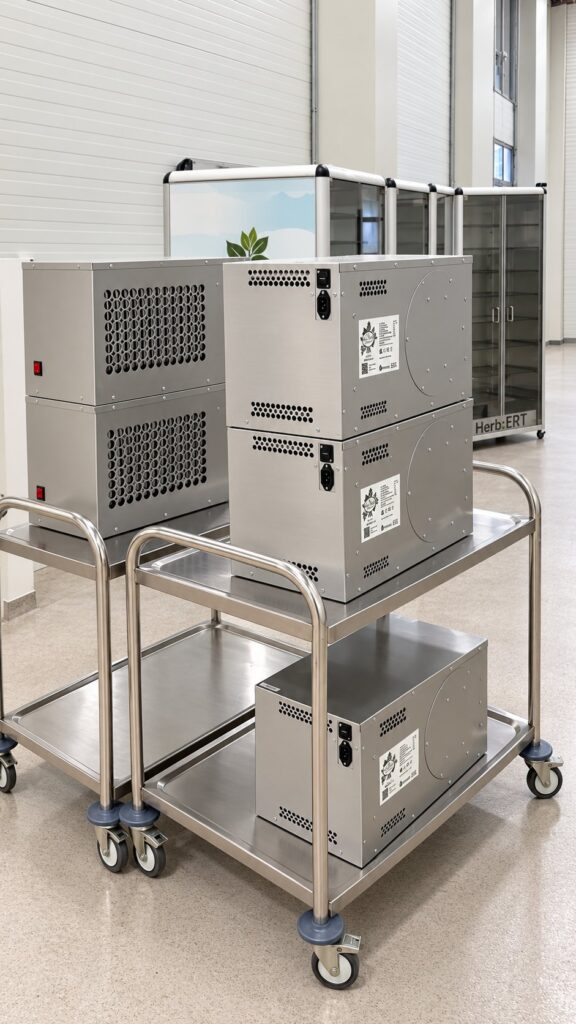
Gallery: Herb.ERT in a cluster
Who it’s for
For three types of business
Growing pasta manufactories
Demand is rising, and drying space on racks and stands has reached its limit. Herb.ERT turns drying into a closed, plannable process that grows with production.
Farm manufactories with speciality doughs
Your own grain, lupins, spelt or farm eggs: if you refine your own raw materials, you need drying that secures quality and reduces workload.
Hospitality, delicatessen and private label
Homemade pasta for your own kitchen, the hotel shop or as a private label: reproducible drying quality for products you can sell with confidence.
FAQ
Frequently asked questions about professional pasta drying
Can any pasta be dried?
In principle, all pasta doughs are suitable for drying, with or without egg. What matters is the recipe, shape, dough thickness and a controlled drying process. Salted doughs often do not dry completely in open air because salt binds moisture; in the closed drying cabinet, this works reliably.
From what volume does Herb.ERT pay off?
From around 20 kg of pasta per day, a dedicated drying cabinet with up to 7.2 m² of drying area pays off. For larger volumes, several drying cabinets work together in a cluster, or a TC Container for 60 to 500 kg per batch is used. For hospitality and smaller batches there is the Workstation.
How long does pasta drying take?
Depending on raw weight, shape and dough thickness, between 8 and 24 hours. Very compact products such as large pasta nests may take a little longer.
Do I have to set time and temperature myself?
No. The automatic pasta programme controls pre-drying and final drying by itself. Over-drying is practically impossible because Herb.ERT works without heating elements. Thanks to the transparent doors, you can keep an eye on the process at all times.
Why is a closed system more hygienic?
Room air contains 100 to 250 CFU of microorganisms per m³. Open dryers often move hundreds of cubic metres of air per hour over the pasta. In the closed Herb.ERT drying cabinet, only around 1 m³ of process air circulates, independent of room climate and draughts.
How can I tell that the pasta is dry?
With the break test: if the pasta snaps cleanly and dry, it is sufficiently dried. If it still bends, it contains residual moisture. Commercial producers must also comply with food law requirements on residual moisture, packaging and shelf life.
More about Herb.ERT
Read more on herb-ert.at (in German)
Application
Pasta & noodles
Pasta drying with Herb.ERT: typical problems, benefits and workflow at a glance.
Article
Drying pasta systematically
The physics of pasta drying: humidity, temperature, air quality and the Dry-Soft process.
Practice
Drying pasta – but how?
Pasta types, typical mistakes, break test and storage of dried pasta.
Hygiene
Safety & hygiene
Why the closed process-air system keeps microbial load and quality under control.
Comparison
Herb.ERT vs. food dehydrator
What makes Herb.ERT different from dehydrators, freeze dryers and vacuum dryers.
Also: Drying cabinet · TC Container · Energy efficiency
Contact
Request a consultation
Tell us briefly about your production: pasta types, recipes, daily volume and how you dry today. We will show you which setup suits your business.
Phone +43 (0) 2732 21211 · office@herb-ert.at
About Herb.ERT
Herb.ERT, developed and manufactured in Lower Austria for 15 years, is a modular system for the gentle dry-maturing and refinement of food. The technology combines gentle process temperatures with controlled air flow for resource-efficient food processing.
